
AI Virtual Assistants engineered for enterprise operational capacity. Deploy autonomous digital workforce units for customer support, lead qualification, and voice interactions."/>
CCDA Intro Logo
02 / DIGITAL WORKFORCE

AI Virtual Assistants for Operational Capacity

CCDA designs and deploys specialized digital workforce units that operate alongside your human teams. We build autonomous AI virtual assistants trained on explicit operational roles—decoupling transaction capacity from headcount growth.

Discuss a Digital Workforce Explore Workforce Roles

No prepared brief required. Start with one workflow.
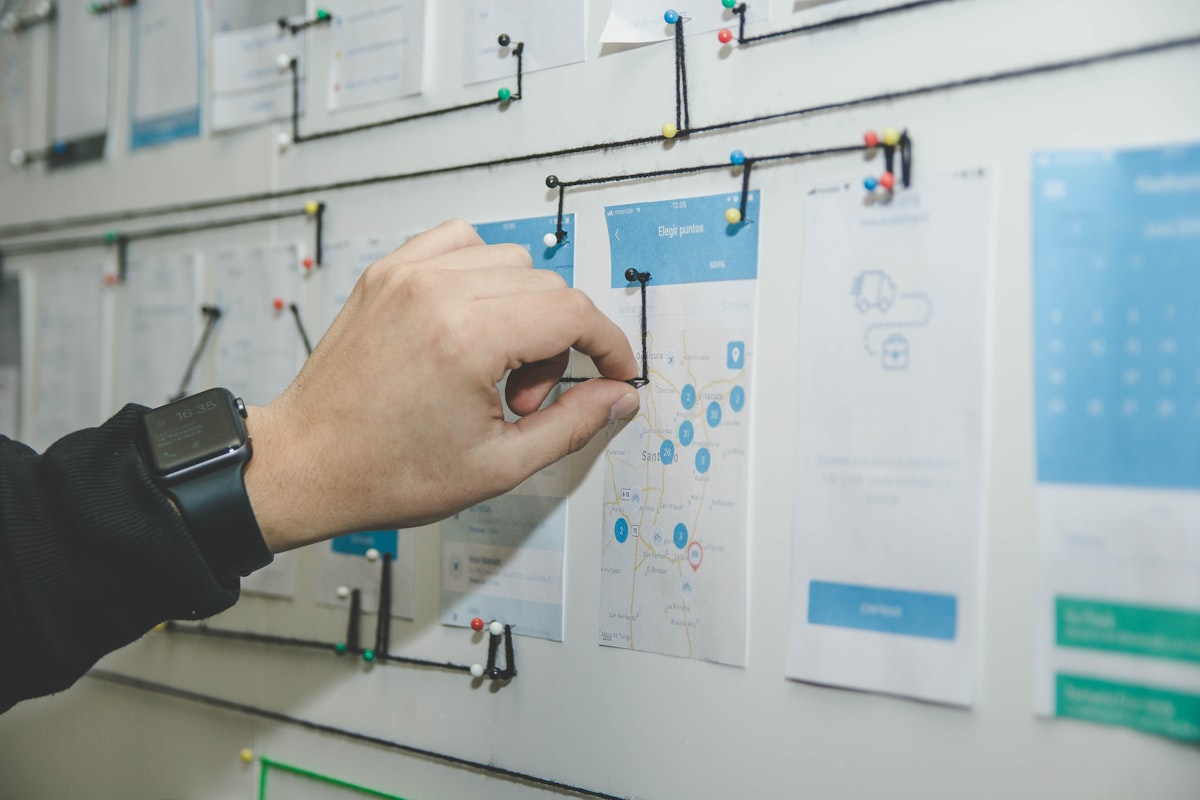
AI Virtual Assistant Deployments

WORKFORCE PHILOSOPHY

The Question Is Not How Many People AI Replaces.

The Question Is How Much Capacity Each Team Can Operate With.

Digital workforce systems are designed to absorb repetitive, structured work so human teams can spend more time on judgment, relationships, exceptions, and higher-value decisions.

DIGITAL WORKFORCE FUNCTIONS

Where Digital Workforce Creates Capacity

Assign dedicated AI virtual assistants to high-frequency administrative, communication, and operational workflows.

Omnichannel Support Assistants

Operates across webchat, email, and messaging channels 24/7. Resolves standard customer queries, checks transaction histories, and executes routine account updates.

Lead Management System

Scores inbound inquiries in real time, collects structured project scope data, verifies contact details, and assigns qualified leads to account executives.

Appointment & Booking Management

Coordinates complex multi-party calendar availability, issues automated reminders, manages reschedules, and synchronizes booking data with CRM calendars.

Conversational Voice & Phone Desk

Handles inbound call queues using natural voice AI, answers operational questions, verifies caller identities, and intelligently routes complex calls.

OPERATING ENVIRONMENTS

Example Operating Environments

How digital workforce units split execution between system automation and human judgment.

Note: Illustrative scenario values. Actual performance depends on workflow design, data quality, volume, integrations, and operating conditions.
ENVIRONMENT 01

Healthcare: Patient Intake & Coordination Desk

SYSTEM ROLE:

Automates structured patient intake forms, preliminary symptom triage categorization, and appointment confirmation reminders.

HUMAN ROLE:

Clinical judgment, medical diagnosis, and patient care remain strictly with qualified medical personnel.

89%
Triage Speed (Scenario)
3.4x
Intake Throughput
45%
Call Queue Reduction
92%
Patient CSAT Model
ENVIRONMENT 02

Financial Advisory: Client Intake & KYC Verification

SYSTEM ROLE:

Manages client document collection, validates identity credentials against database checks, and schedules reviews.

HUMAN ROLE:

Advisory strategy, portfolio management, and client relationships remain with financial advisors.

4.2x
Lead Qualification
65%
Faster Onboarding
100%
Audit Log Traceability
0
Manual Form Handoffs
ENVIRONMENT 03

SaaS Platforms: Trial Activation & Support

SYSTEM ROLE:

Monitors trial user onboarding milestones, proactively offers technical setup guidance, and triages account support.

HUMAN ROLE:

High-touch enterprise closing and custom SLA contract negotiations remain with sales leadership.

3.4x
Trial Conversion Model
65%
Faster Time to Value
78%
Qualification Accuracy
45%
Ticket Deflection
ENVIRONMENT 04

eCommerce & Retail: Order & Return Desk

SYSTEM ROLE:

Handles order tracking inquiries, validates return policies, generates shipping labels, and assists with product compatibility.

HUMAN ROLE:

Complex customer dispute resolution and vendor contract adjustments remain with customer ops leads.

35%
Cart Recovery Model
82%
Self-Service Resolution
2.9x
Volume Capacity
< 3s
Response Time Model
ENVIRONMENT 05

Real Estate: Property Inquiry & Tour Scheduling

SYSTEM ROLE:

Engages buyers/renters 24/7, verifies budget requirements, shares specs, and schedules walkthroughs.

HUMAN ROLE:

Property closing, offer negotiation, and relationship management remain with licensed real estate professionals.

85%
Qualification Accuracy
2.0x
Tour Booking Rate
90%
Calendar Sync Accuracy
70%
Property Match Rate

OPERATING MODEL SHIFT

Traditional vs. Digital Workforce Operating Model

Compare linear headcount scaling against an elastic, digital workforce architecture.

Dimension Traditional Operating Model Digital Workforce Operating Model
Capacity Scaling Linear; requires hiring, onboarding, & physical space. Elastic; instant software instance allocation for volume spikes.
Availability Fixed shift schedules (8h / 5 days). Continuous 24/7/365 operational availability.
Data Handoffs Manual re-keying & spreadsheet tracking. Direct API synchronization with CRMs & ERPs.
Governance Variable human adherence to SOPs. Deterministic execution bounded by rule guardrails.
Cost Structure High fixed labor & administrative overhead. Asset-light operational cost aligned with transaction volume.

BUYER FAQ

Frequently Asked Questions

Key answers for operational leaders evaluating digital workforce implementation.

A simple assistant handles isolated tasks like answering FAQs. An enterprise digital workforce consists of role-based AI units integrated directly into enterprise software stacks, capable of managing multi-step workflows, executing system API actions, and maintaining full audit compliance.
They connect via native APIs and webhooks into tools your team already uses—including Slack, Microsoft Teams, WhatsApp Business, Zendesk, Salesforce, and email gateways.
We configure Human-in-the-Loop (HITL) triggers. When a transaction exceeds predefined threshold limits or encounters ambiguous data, the assistant pauses execution and routes a review request to the designated manager with context logs.
Yes. Our voice virtual assistants utilize low-latency speech synthesis and speech-to-text models to manage inbound call handling, customer verification, and phone booking workflows naturally.
We enforce strict Role-Based Access Control (RBAC). Digital assistants only access data fields explicitly permitted for their assigned operational role. Data is encrypted using TLS 1.3 / AES-256 protocols.
By transferring routine inquiries and administrative intake to digital workforce units, existing teams typically experience a 2x to 4x increase in total transaction handling capacity without adding headcount.
Role scoping and integration setup takes 1 to 2 weeks. Sandboxed role training and edge-case testing completes within 3 to 4 weeks, leading to production launch in under 6 weeks.
Because digital assistants run as containerized software microservices, infrastructure auto-scales compute instances dynamically during peak traffic without human intervention.
Minimal training is needed. Human operators interact with digital assistants through standard ticketing systems, Slack/Teams notifications, or CRM dashboards, allowing them to focus on high-value human decisions.
The assistant executes deterministic fallback procedures—logging the request in a retry queue, notifying system administrators, and informing the user of the temporary system maintenance status.
Every interaction, decision path, and API call is logged in an immutable telemetry audit ledger accessible via an executive monitoring dashboard.
Contact CCDA for an operational bottleneck review. We analyze your staff time allocation, repetitive task frequency, and data handoffs to identify high-ROI digital assistant roles.
GET STARTED

DESIGN THE DIGITAL WORKFORCE AROUND THE WORK

Talk to our engineering team to assess where dedicated AI virtual assistants can unlock operational capacity for your organization.

Discuss a Digital Workforce

No prepared brief required. Start with one workflow.